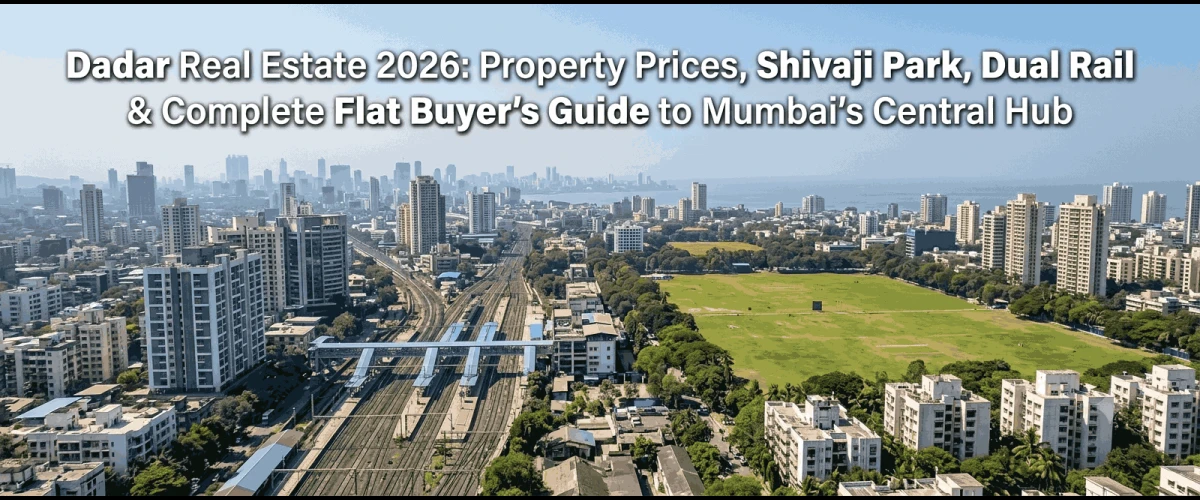
Dadar Real Estate 2026: Property Prices, Shivaji Park, Dual Rail & Complete Flat Buyer's Guide to Mumbai's Central Hub

Dadar in 2026: Central Mumbai's Most Connected Locality
Dadar holds a position in Mumbai's real estate hierarchy that no other suburb can replicate: it is simultaneously on the Western Railway line, the Central Railway line, the Harbour Line interchange, and served by Metro Line 3 (Aqua Line) at Dadar station - making it the single most rail-connected residential locality in the city. In September 2026, this multi-modal connectivity advantage is the primary reason Dadar commands a sustained premium over comparable central Mumbai addresses.
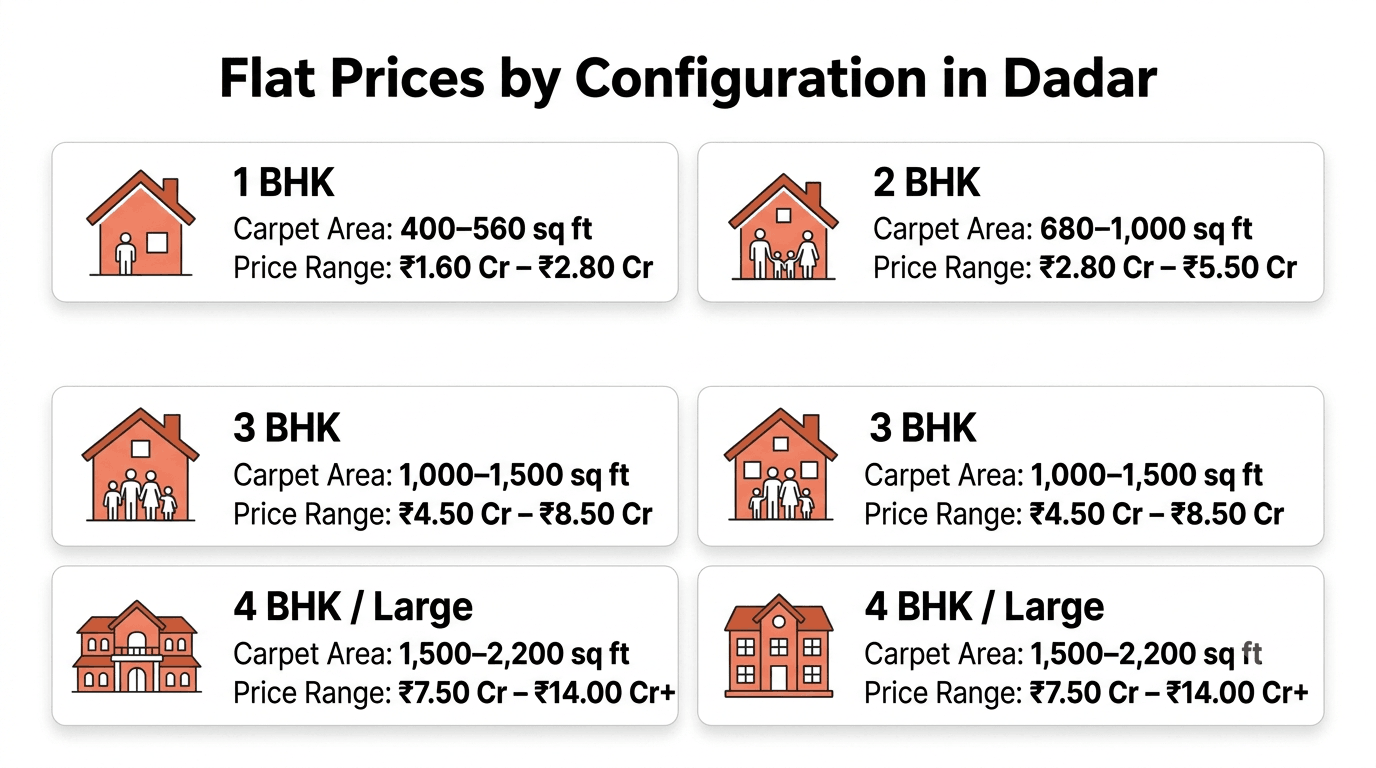
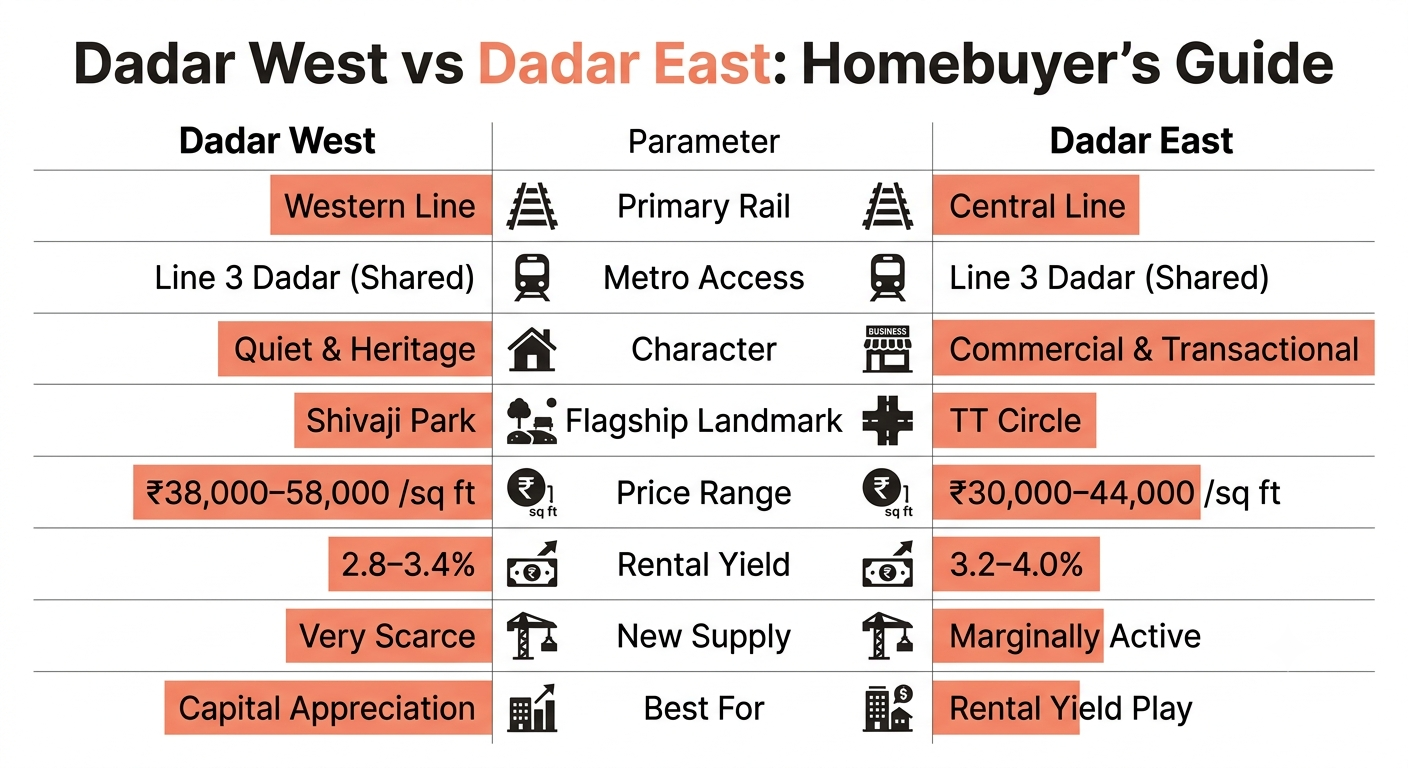
The two distinct belts - Dadar West (Shivaji Park, Portuguese Church, Cadell Road) and Dadar East (TT Circle, Naigaon, Dadar TT junction) - have meaningfully different character, buyer profiles, and pricing, but share the same connectivity floor. Dadar West is a heritage-premium, supply-scarce residential belt anchored by Shivaji Park and the Portuguese Church corridor. Dadar East is a more transactional, mixed residential-commercial belt with slightly lower prices and higher inventory turnover.
Flat prices average Rs40,000–55,000 per sq ft in Dadar West and Rs32,000-42,000 per sq ft in Dadar East as of September 2026. New supply is structurally limited - the suburb is largely built out, and new launches come primarily from SRA redevelopment, old-building DCR redevelopment, and the occasional private plot launch.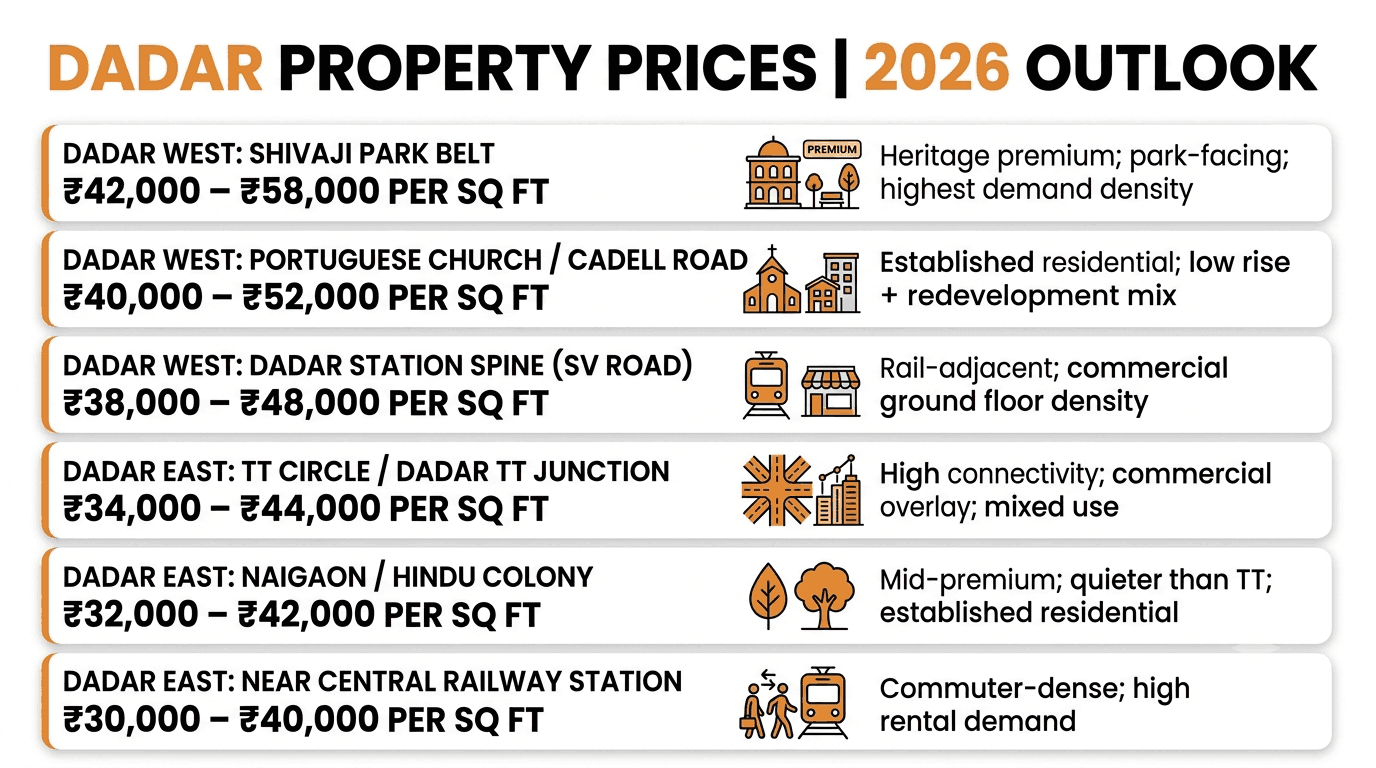
Rail Connectivity: Mumbai's Most Multi-Modal Suburb
Western Railway - Dadar Station:
- Churchgate: 12–15 min
- Bandra: 8–10 min
- Andheri: 18–22 min
- Borivali: 30–35 min
Central Railway - Dadar Station:
- CST (South Mumbai): 18–22 min
- Kurla: 12–15 min
- Thane: 28–32 min
- Pune (long-distance, Deccan Express / intercity trains depart from Dadar Central)
- BKC: 14-18 min
- SEEPZ / Andheri East: 22-26 min
- Bandra: 10-12 min
- Airport (T1/T2): 30-35 min
Shivaji Park: The Premium Anchor of Dadar West
- View premium: Park-facing or park-adjacent buildings command a 15–22% premium over comparable Dadar West stock at equivalent floors
- Supply constraint: The park perimeter is fully built - no new ground-floor FSI is available on park-facing plots; all additions come from DCR redevelopment of aging structures
- Buyer profile: Long-hold buyers - Marathi-speaking established professional families, inter-generational Dadar residents, and mid-to-senior corporate buyers from South Mumbai commuting to Nariman Point or BKC
Dadar as a Transport Hub: The BKC Commute Advantage
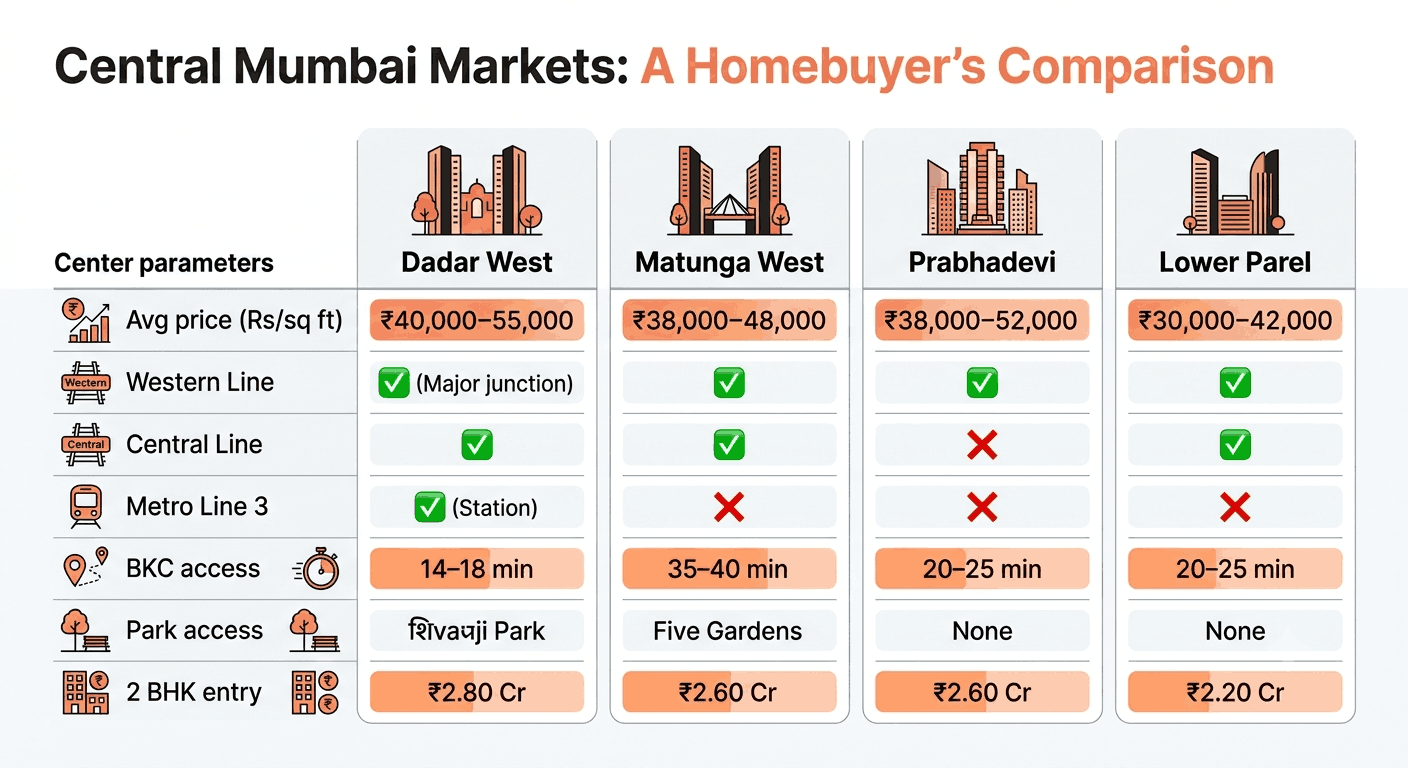
The comparison that matters:
- Bandra West (BKC 12-15 min by cab): Rs45,000-65,000/sq ft
- Prabhadevi (BKC 20-25 min by cab): Rs38,000-52,000/sq ft
- Dadar West (BKC 14-18 min by Metro Line 3): Rs40,000-55,000/sq ft
- Matunga (BKC 35-40 min via Metro+cab): Rs38,000-48,000/sq ft
Supply Dynamics: Why New Flats in Dadar Are Rare
- DCR 33(7) / 33(9) old-building redevelopment: Tenanted buildings (cessed buildings under MHADA) redeveloped under DCR permissions. Generates a steady but slow trickle of new flats; typically 60-90 units per project. Buyers should verify MHADA/BMC cessed-building status and structural audit.
- SRA redevelopment: Limited pockets, primarily in the Naigaon-Hindu Colony fringe. SRA lock-in and title complexity - check MahaRERA separately.
- Private plot launches: Very rare. A handful of private developers have redeveloped individual plots in Dadar West; these are typically premium (Rs50,000–65,000/sq ft) and over-subscribed at launch.
Investment Outlook: 2026–2031
5-year appreciation estimate: 25–34% blended
- Shivaji Park / park-facing Dadar West: 28–36% (supply scarcity + BKC metro thesis combined)
- Cadell Road / Portuguese Church belt: 25–32%
- Dadar East (TT Circle / Hindu Colony): 22–28%
Frequently Asked Questions
What are property prices in Dadar in 2026?

Is Dadar connected by Metro?
What is Shivaji Park and how does it affect Dadar property prices?
What is the difference between Dadar West and Dadar East?
Is Dadar a good investment in 2026?
What types of flats are available in Dadar?
How does Dadar compare to Matunga for flat buyers in 2026?

Get in Touch
Let our experts help you answer your questions

 +91
+91


Get in Touch
Let our experts help you answer your questions
+91