Mira Road Affordable Housing 2026: Property Prices, Metro Line 9 Impact & Complete Buyer's Guide

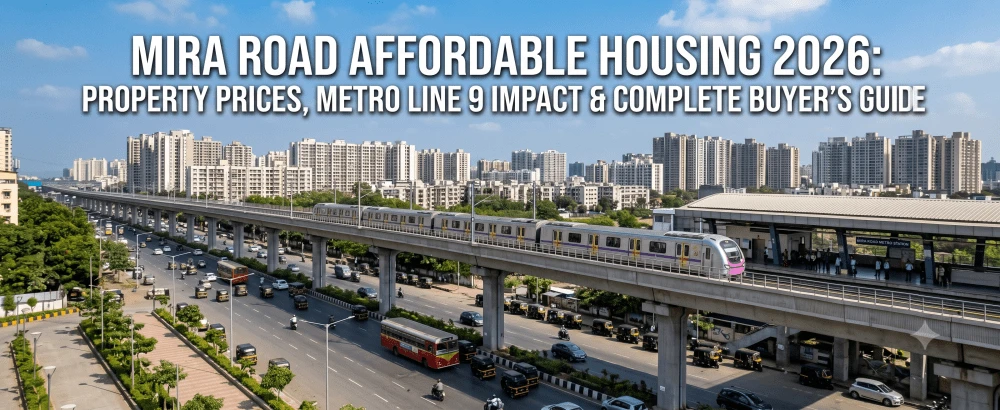
There's a neighbourhood in the Mumbai Metropolitan Region that has quietly become the budget buyer's best-kept secret - and in 2026, that secret is very much out. Mira Road and Bhayandar, tucked just beyond the Mira-Bhayandar Municipal Corporation boundary north of Borivali, offer Mumbai-calibre connectivity at a fraction of Mumbai's property prices, and the launch of Metro Line 9 Phase 1 in April 2026 has just supercharged that value proposition further.
Average property prices in Mira Road hover around ₹16,800 per sq ft - roughly 40–50% below comparable localities in Borivali or Kandivali just a few kilometres south. For a buyer with a budget of ₹60L–₹90L, Mira Road offers something that most Mumbai markets have stopped offering: a full 2BHK apartment in a modern society, with real amenities, within reach of a train station, and with metro access now becoming a reality.
This guide unpacks everything you need to know about Mira Road and Bhayandar's affordable housing market in 2026 - from the price data and investment case to the Metro Line 9 revolution, PMAY subsidy access, top localities, builder projects, and the practical steps to buying here.
Mira Road and Bhayandar: Why This Market Exists
Mira-Bhayandar Municipality (MBMC) is a twin-city belt that sits at the northern tip of Salsette Island, bounded by Thane Creek on the east, the Arabian Sea on the west, Borivali (Mumbai) to the south, and Vasai to the north. It is formally outside the Brihanmumbai Municipal Corporation (BMC) limits, which is precisely why it has stayed affordable.
Lower FSI norms, lower stamp duty base values (circle rates are set by the Maharashtra government, not inflated BMC ready reckoner rates), and historically weaker rail connectivity have combined to create a structural price discount versus Mumbai proper. That discount is now being arbitraged away by Metro Line 9 - but the process is gradual enough that buyers entering in 2026 can still capture meaningful upside.
Key Stats - Mira-Bhayandar in 2026:
- Municipal authority: Mira-Bhayandar Municipal Corporation (MBMC)
- Distance to Borivali station: 6–9 km
- Distance to Dahisar (Mumbai border): 3–6 km
- Train connectivity: Western Railway Mira Road and Bhayandar stations
- New connectivity: Metro Line 9 Phase 1 operational (April 2026)
- Average residential price: ₹14,000–₹20,000/sq ft (mainstream market)
- Affordable housing pocket prices: ₹6,000–₹10,000/sq ft
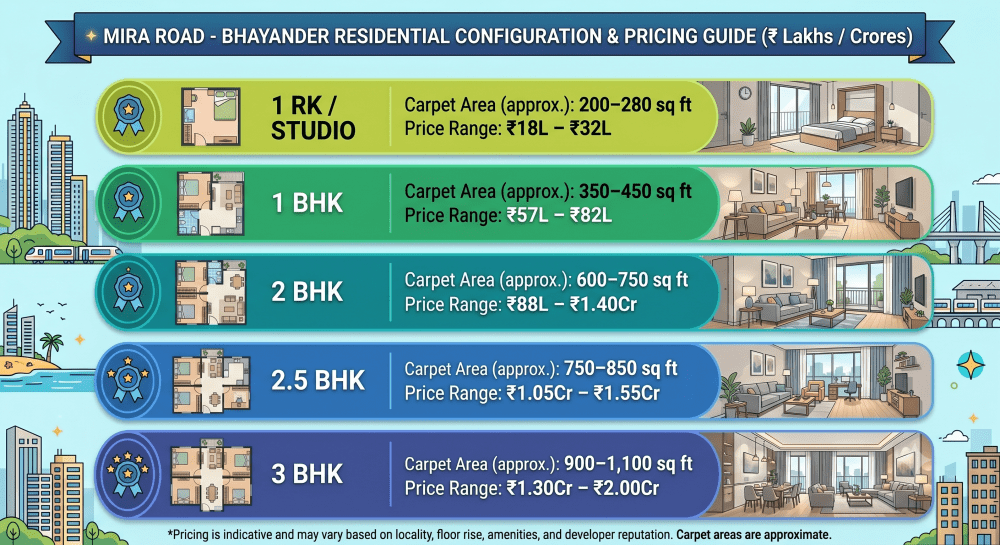
- 1 BHK price range: ₹57L–₹82L
- 2 BHK price range: ₹85L–₹1.40Cr
Metro Line 9 April 2026: The Game Changer for Mira Road Property
No single development has transformed Mira Road's investment thesis more dramatically than the launch of Metro Line 9 Phase 1 on April 3, 2026. The elevated metro corridor connecting Dahisar (East) to Mira Bhayandar is Mumbai's first direct mass-transit link into the MBMC zone, breaking a connectivity ceiling that had kept prices artificially suppressed for years.
Metro Line 9 Fast Facts:
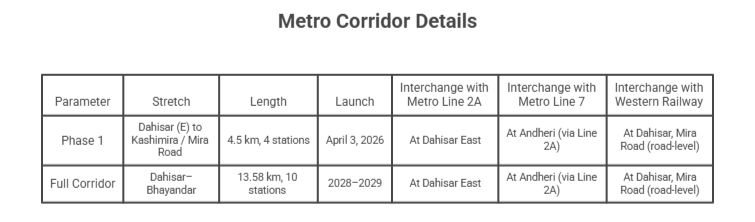
What Metro Line 9 means for buyers and investors:
- Connectivity leap: Before Metro Line 9, Mira Road residents relied entirely on the Western Railway suburban network - heavily congested during peak hours with limited frequency. Metro adds a faster, air-conditioned, reliable alternative, making the area significantly more liveable.
- Price impact already measurable: Areas within walking distance of the 4 Phase 1 stations have already registered 15–20% price increases since construction completion signals in late 2025. Over-station projects and societies within 500m of station exits command an explicit metro premium.
- New buyer profile: The metro has expanded Mira Road's buyer pool from primarily self-employed / small business owners (who could work flexibly) to include salaried IT/corporate professionals working in Andheri, Goregaon, and Malad - who can now reach their offices in under 45 minutes.
- Pre-emptive investment zones: Localities near future Phase 2 stations (Bhayandar side) currently show minimal metro premium - but offer the strongest forward appreciation potential as Phase 2 construction advances toward the 2028–2029 target.
Mira Road Property Prices 2026: Area-Wise Breakdown
Pricing across Mira Road and Bhayandar is highly location-specific. The premium-to-affordable spread within the belt is wider than almost any other MMR micro-market:
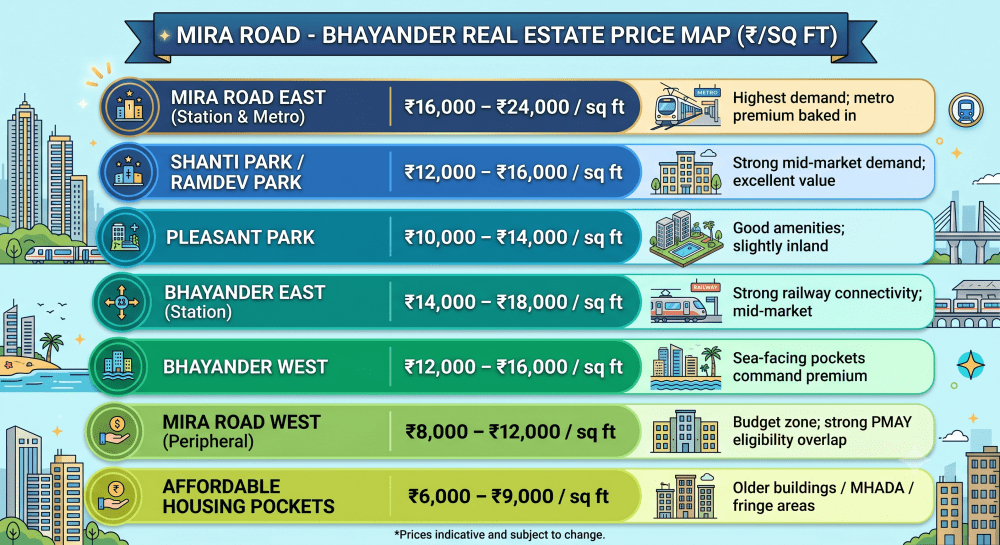
Configuration-wise ticket sizes:
PMAY Eligibility: Can You Claim Subsidy on a Mira Road Home?
The Pradhan Mantri Awas Yojana (PMAY-Urban) CLiSS (Credit Linked Subsidy Scheme) remains one of the most powerful tools for affordable housing buyers. Mira Road's price point places many projects squarely within PMAY subsidy territory:
PMAY-Urban 2026 Eligibility Summary:
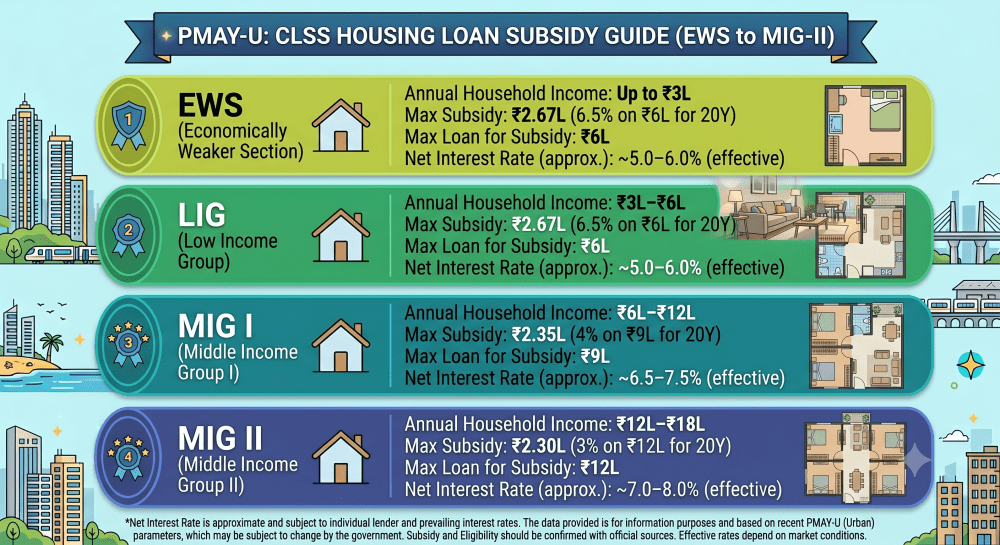
How to claim PMAY on a Mira Road purchase:
- Confirm household income falls within one of the above categories
- Ensure neither you, your spouse, nor any dependent owns a pucca (permanent) house anywhere in India
- Choose a RERA-registered project meeting PMAY carpet area norms (EWS: up to 30 sq m, LIG: up to 60 sq m, MIG I: up to 120 sq m, MIG II: up to 150 sq m)
- Apply for subsidy through a PMAY-empanelled bank (SBI, HDFC, ICICI, Bank of Baroda, etc.) when processing your home loan
- The subsidy is credited directly to your loan principal account, reducing outstanding balance within 3–6 months of disbursement
Mira Road PMAY opportunity: A large proportion of new launches in Mira Road West and peripheral Bhayandar are specifically designed and RERA-sized to qualify for MIG I and MIG II PMAY subsidy - effectively shaving ₹2–₹2.35L off the loan principal. On a ₹90L purchase with ₹65L loan, this is equivalent to 3.5% of the purchase price.
Top Localities to Buy Affordable Housing in Mira Road 2026
1. Mira Road East - Best for Connectivity-Seekers
The eastern half of Mira Road, clustered around the Western Railway station and the new Metro Line 9 corridor, is the neighbourhood's connectivity hub. This is where you pay the highest prices within the Mira Road belt - but also where you get the fastest appreciation and easiest tenant acquisition.
- Best for: Salaried buyers commuting to Andheri / Malad / Goregaon
- Price sweet spot: ₹16,000–₹20,000/sq ft
- Recommended budget: ₹88L–₹1.30Cr for a 2BHK
- Key landmarks: Mira Road station, upcoming Metro Line 9 stations, Highway Mall
2. Shanti Park - Best for Family Buyers
Shanti Park is one of Mira Road's most well-established residential pockets - wide roads, mature tree cover, good school density, and a mix of older societies and new-launch towers. Prices are moderate and the social infrastructure is outstanding for the price point.
- Best for: Families with school-going children; self-employed professionals
- Price sweet spot: ₹12,000–₹16,000/sq ft
- Recommended budget: ₹72L–₹1.05Cr for a 2BHK
- Key landmarks: Shanti Park building clusters, St. John's Church area
3. Bhayandar East - Best for Rail Commuters + Value
Bhayandar East sits one station north of Mira Road on the Western Railway line and offers the combination of rail connectivity and a marginally lower price point. Future Metro Line 9 Phase 2 stations will serve Bhayandar East directly, creating significant forward appreciation potential.
- Best for: Investors seeking Phase 2 metro upside; budget buyers wanting the Mira Road ecosystem at a discount
- Price sweet spot: ₹13,000–₹17,000/sq ft
- Recommended budget: ₹78L–₹1.15Cr for a 2BHK
4. Mira Road West - Best for PMAY Buyers and End-Users on Tight Budgets
Mira Road West's peripheral pockets are the most affordable sub-market in the belt - properties here start as low as ₹8,000/sq ft in older or smaller-builder stock. PMAY subsidy buyers, EWS and LIG segment households, and first-time buyers with budgets of ₹40L–₹70L will find the best value here.
- Best for: PMAY applicants; sub-₹70L budget buyers; long-term hold
- Price sweet spot: ₹8,000–₹12,000/sq ft
- Recommended budget: ₹40L–₹80L for 1BHK/2BHK
Mira Road vs. Comparable Affordable Markets 2026: How Does It Stack Up?
Buyers considering Mira Road typically compare it with four other MMR affordable markets. Here's a frank comparison:
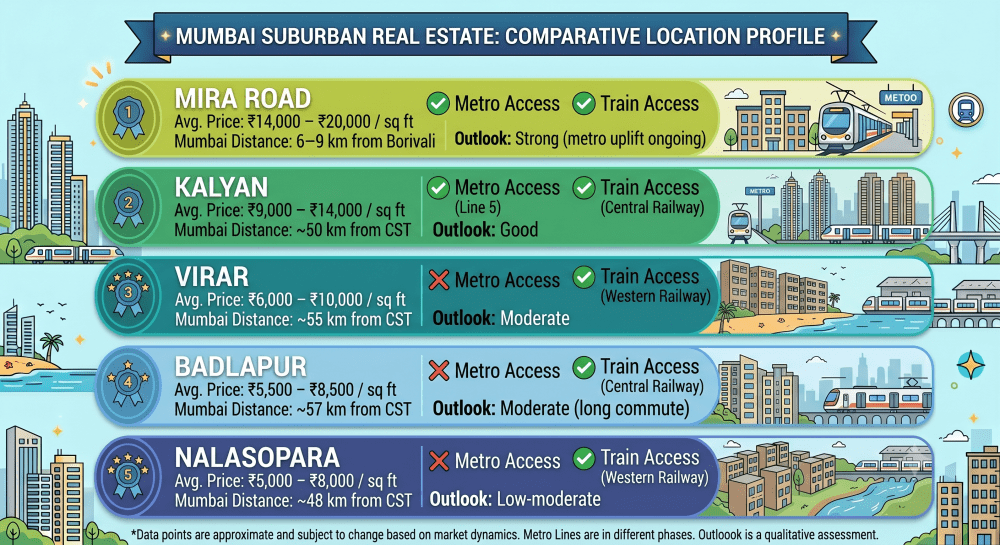
Mira Road's edge: It offers the best connectivity-to-price ratio among all MMR affordable markets. No comparable belt under ₹20,000/sq ft has Metro + Railway + proximity to Mumbai all at once. The limitation remains the higher base price vs. Virar or Badlapur - but that premium is increasingly justified by the infrastructure reality.
Builder Landscape in Mira Road 2026: Who's Building What
Over 60% of upcoming inventory in Mira-Bhayandar is positioned near proposed metro station catchments. Developers have deliberately timed launches around metro readiness, creating a strong pipeline of new-launch projects in 2026:
Established players with projects in Mira Road-Bhayandar:
- Asmita India Realty - Active developer with multiple Mira Road launches; focus on mid-market 2BHK and 3BHK.
- Kanakia Group - Mixed-use township projects; strong amenity packages.
- Rubberwala Group - Established western suburb developer entering Mira Road with affordable inventory.
- Shapoorji Pallonji (via JV) - Affordable housing JV projects under PMAY framework.
- Local developers (50+ active) - The Mira Road market has a very high proportion of smaller developers offering competitive pricing; quality varies significantly - always verify MahaRERA.
What to look for in a Mira Road project in 2026:
- MahaRERA registration - Mandatory; verify at maharera.mahaonline.gov.in
- MBMC approval - Confirm building plan sanction from Mira-Bhayandar Municipal Corporation
- OC / CC status - Demand occupancy certificate for ready properties; for under-construction, confirm RERA-registered completion date
- Amenities vs. maintenance cost - Avoid "luxury" projects in this belt that charge ₹8–₹12/sq ft/month maintenance on a ₹70L flat; the math doesn't work
- Developer track record - Ask for completed project addresses and visit in person; Mira Road has a history of smaller developers delaying possession
Common Mistakes Affordable Housing Buyers Make in Mira Road
Mistake 1: Buying in flood-prone microzones.
Mira Road has several low-lying sectors that flood during the monsoon (June–September). Before finalising, check the locality's flood history, drainage infrastructure, and whether the specific building floor is above potential flood levels. The 2005 and 2017 floods affected several Mira Road East sectors. Ask the housing society for monsoon footage.
Mistake 2: Ignoring the commute arithmetic.
Mira Road feels close to Borivali on a map but rush-hour conditions on the Western Railway can mean 45–60 minute journeys to Churchgate during peak hours. Validate the actual commute to your workplace by riding it on a weekday before buying.
Mistake 3: Overpaying for "metro proximity" before Phase 2.
Phase 1 stations cover only 4.5 km of a 13.58 km corridor. Properties near Phase 2 stations (in Bhayandar) should not carry the same metro premium today as Phase 1 stations. Evaluate as "anticipated metro proximity" - which carries lower certainty than operational metro access.
Mistake 4: Skipping resale due diligence on older buildings.
Mira Road has a significant stock of buildings from the 1990s that look affordable on price but carry legal complexities: unauthorised constructions, unapproved floors, pending MBMC dues, or disputes between original allottees and current owners. For any resale property, get an independent advocate's title search before paying token.
Mistake 5: Not checking PMAY eligibility before signing.
A ₹2.35L PMAY subsidy on a ₹90L home is the equivalent of a ~6% discount. Too many buyers skip this step and lose the subsidy because they signed the agreement before applying for a PMAY-linked loan. Always check eligibility first.
Rental Market in Mira Road 2026: What Investors Should Know
Mira Road is predominantly an end-user market - approximately 70–75% of buyers are owner-occupiers. Rental demand exists but is more price-sensitive than in core Mumbai nodes:

Rental yield note: Net yields after vacancy, society maintenance, and property tax are typically 1.5–2.5% - below Mumbai's average. Mira Road is a capital appreciation play for most investors, not a yield play. The rental market works better for self-use buyers who see the rent-equivalent savings as their "yield."
Best rental sub-market: Mira Road East, near the Western Railway station and Metro Line 9 Phase 1 stations. Tenant turnover is lowest here and vacancy fill fastest given proximity to public transport.
Mira Road Buyer Action Plan: Step-by-Step for 2026
Step 1: Confirm budget and loan eligibility.
Get a pre-approved home loan from at least 2 banks before visiting properties. For a ₹80L loan at 8.75% over 20 years, your EMI will be approximately ₹70,000/month. Ensure your net monthly income is at least ₹2.1–₹2.5L (banks require EMI to be max 40–50% of income).
Step 2: Check PMAY eligibility.
Go to pmaymis.gov.in, confirm income category, and speak to your bank's PMAY nodal officer before signing anything.
Step 3: Choose your sub-market.
Match your primary need to the right pocket:
- Best connectivity = Mira Road East (near railway + metro)
- Best value for families = Shanti Park
- Best PMAY / ultra-affordable = Mira Road West
- Best forward-appreciation = Bhayandar East (Phase 2 metro upside)
Step 4: Shortlist RERA-verified projects only.
Search maharera.mahaonline.gov.in for MahaRERA project registrations. Reject any project not in the database.
Step 5: Physical site visit + society inspection.
Visit in person - ideally on a weekday morning and once during the monsoon if timing allows. Check road condition, drainage, building quality, and lobby maintenance.
Step 6: Engage a local property lawyer.
Title search (₹5,000–₹15,000) is non-negotiable in Mira Road's secondary market. Have the lawyer check MBMC approvals, society formation, and encumbrance certificate.
Step 7: Negotiate on stamp duty base.
Ready reckoner rates in MBMC are typically 20–30% below actual transaction prices - unlike Mumbai where circle rates are closer to market. This creates negotiation room on the declared value, which affects your stamp duty computation.
Step 8: Complete registration.
Pay stamp duty (5% / 4% depending on purchaser gender) and register at the Mira-Bhayandar sub-registrar's office.
Conclusion: Should You Buy Affordable Housing in Mira Road in 2026?
If you're a first-time buyer or investor with a budget of ₹60L–₹1.40Cr and you want genuine value - a real apartment in a real neighbourhood, with public transport, schools, hospitals, and a forward appreciation story - Mira Road in 2026 delivers that proposition better than almost anywhere else in the Mumbai Metropolitan Region.
Metro Line 9 has fundamentally changed the connectivity picture. Prices have already partially priced in the Phase 1 uplift, but the Phase 2 corridor expansion toward Bhayandar means the story isn't over. PMAY subsidy access at the MIG I/II level further sweetens the purchase economics for households earning ₹6L–₹18L annually.
The risks are real - monsoon flooding in some pockets, quality variation among smaller builders, and a secondary market that requires careful legal due diligence. But for buyers who do the research, Mira Road remains one of the most compelling affordable housing destinations in India's most expensive city.
Start your Mira Road property search at blox.xyz - verified listings, MahaRERA-confirmed projects, PMAY-linked builder options, and zero brokerage.
Frequently Asked Questions
Is Mira Road a good place to live in 2026?

How is Mira Road different from Virar or Vasai?
Will prices rise further after Metro Line 9 full launch?
Can I get a home loan for an under-construction project in Mira Road?

Get in Touch
Let our experts help you answer your questions

 +91
+91


Get in Touch
Let our experts help you answer your questions
+91